
Cloud Security
Shared Responsibility Model: 6 Misreadings That Leave Cloud Security Gaps
The provider secures the cloud infrastructure while you secure everything you place inside it, including data and identity controls.
Cloud Security coverage from Honeypot Daily holds 19 articles, 16 of them reference guides. The newest was published on October 14, 2026. New stories are added as soon as they are confirmed, from more than 150 sources checked as often as every 45 seconds. Each story lists its sources. Primary sources we follow for this section include Kubernetes: Security Concepts and NIST Cybersecurity Framework.
The provider secures the cloud infrastructure while you secure everything you place inside it, including data and identity controls.

Just-in-time access eliminates standing permissions by granting elevated rights only when needed, then revoking them automatically to reduce the attack surface.

Orphaned cloud resources persist after their parent service is deleted, creating silent security gaps and unmanaged attack surfaces that standard inventory tools often miss.

Catching flaws in source code avoids the exponential cost of fixing them after deployment, turning security from a gate into a continuous filter.

Ukrainian drone strikes on Vladimir, Ryazan and Kaluga sites have forced shutdowns, impacting payments, deliveries and smart devices across Russia.

Virtual private clouds share physical hardware with other tenants, whereas private clouds dedicate infrastructure to a single organisation, creating distinct risk profiles.

A Ukrainian drone attack on a Yandex data centre in Vladimir caused widespread outages for cloud, AI, and consumer apps across Russia on 11 October.
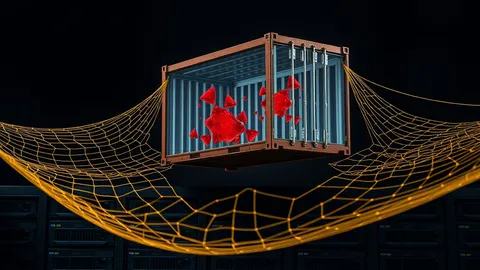
Runtime controls catch compromised containers that build-time scans miss, but they consume host resources and require careful tuning to avoid breaking services.

Private endpoints keep traffic on the internal network backbone, preventing it from touching the public internet even when accessing public cloud services.

Unified visibility fails when public clouds hide metadata, leaving hybrid environments blind to lateral movement between distinct networks.

Default Kubernetes clusters allow all internal traffic, meaning a compromised container can scan and attack every other service without restriction.

CSPM audits static policy compliance while CWPP enforces runtime security controls, meaning one prevents misconfiguration and the other stops exploitation.

Single sign-on centralises identity verification, turning every connected service into a potential pivot point for attackers who bypass perimeter defences.

Denial-of-wallet attacks exploit public cloud pricing models to drain budgets, often bypassing traditional security alerts that monitor for data exfiltration rather than resource consumption.

Migration security is not a phase but a continuous state of verifying that cloud-native threats do not bypass legacy defence models.

Silent permission creep often remains invisible until an attacker exfiltrates data, while noisy errors are merely symptoms of deeper policy failures.

Identity boundaries rarely match network boundaries in hybrid environments, creating blind spots that traditional perimeter tools cannot see or control.

Establish automated policy enforcement to prevent configuration errors, reduce manual overhead, and maintain security posture without hiring dedicated cloud engineers.

Google Cloud introduces an AI agent designed to connect with business systems and streamline tasks through single prompts.