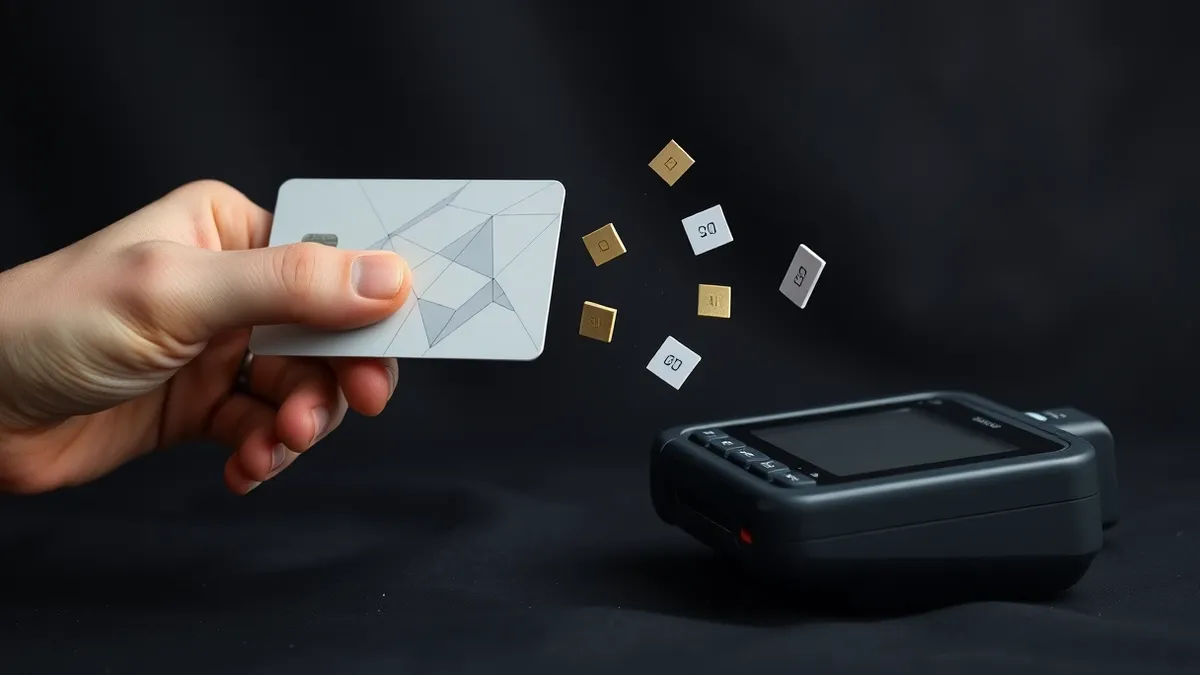
How to Prevent Credit Card Theft: Stop Skimmers and Tokenize Data
Static card numbers are useless to attackers once you replace them with single-use tokens that expire after one transaction.
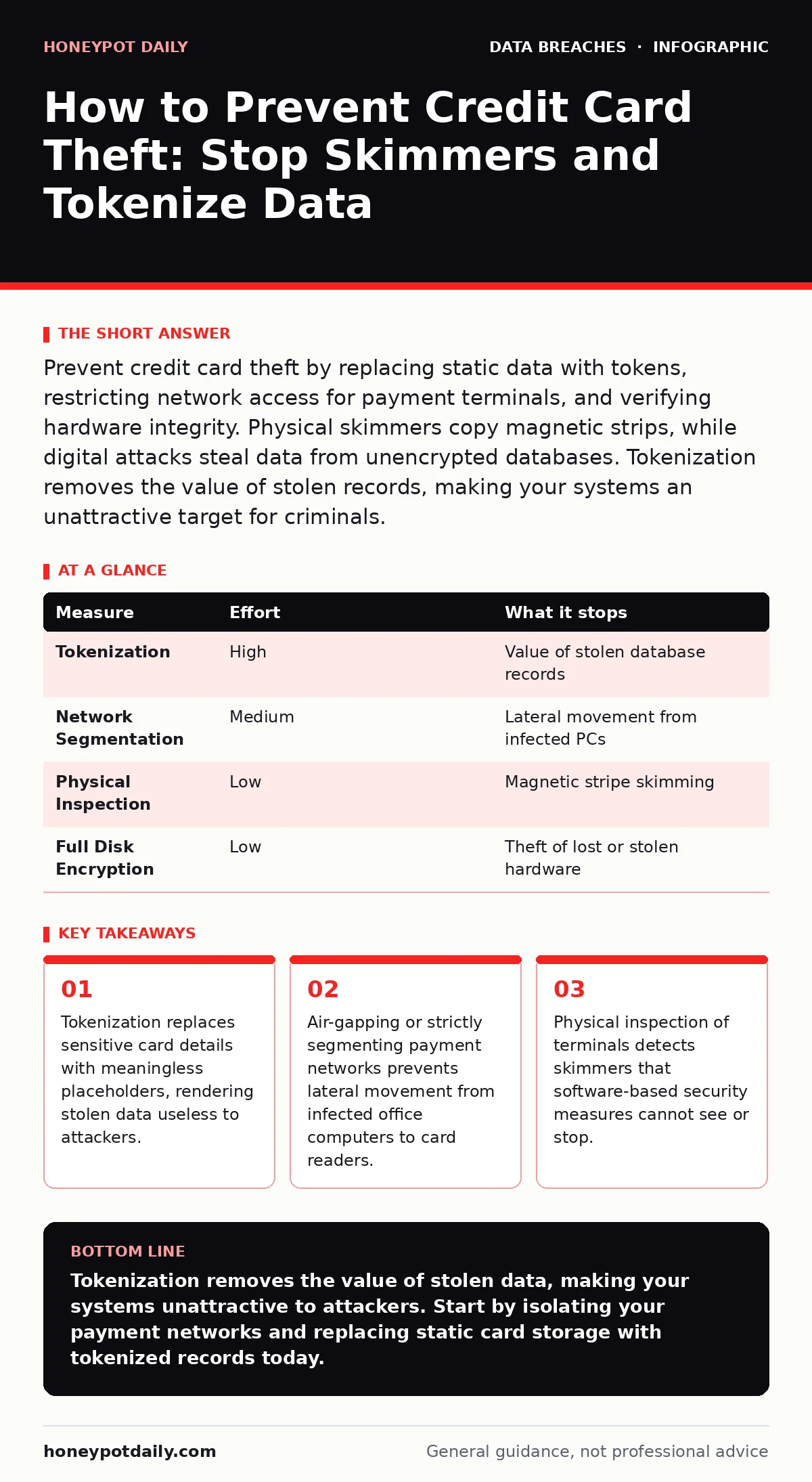
Prevent credit card theft by replacing static data with tokens, restricting network access for payment terminals, and verifying hardware integrity. Physical skimmers copy magnetic strips, while digital attacks steal data from unencrypted databases. Tokenization removes the value of stolen records, making your systems an unattractive target for criminals.
How to Prevent Credit Card Theft
You want to know how to prevent credit card theft because static magnetic stripe and chip data remain valuable commodities on illicit markets. Attackers do not need to breach your main server to steal numbers. They often target the point of interaction, where data is entered or read. Prevention requires securing the physical hardware, isolating the network segments that handle payments, and removing the value of the data itself.
The most effective strategy shifts the risk away from your storage systems. When you store a full card number, you hold a target. When you store a token, you hold a placeholder. This shift changes the entire security posture of your operation.
Tokenization Over Encryption
Encryption scrambles data using a mathematical key. If an attacker steals both the encrypted data and the decryption key, they can read the original numbers. Tokenization replaces the primary account number with a unique, random identifier called a token. This token has no mathematical relationship to the original number. It cannot be reversed without access to the token vault, which sits in a separate, highly secured environment.
Imagine a restaurant that swaps a customer's wallet for a numbered ticket at the coat check. The thief steals the ticket, but the ticket is useless without the clerk's log book. Tokenization works the same way. It is the core mechanism in modern payment processing frameworks.
| Measure | Effort | What it stops |
|---|---|---|
| Tokenization | High | Value of stolen database records |
| Network Segmentation | Medium | Lateral movement from infected PCs |
| Physical Inspection | Low | Magnetic stripe skimming |
| Full Disk Encryption | Low | Theft of lost or stolen hardware |
Network Isolation for Payment Terminals
Payment terminals and point-of-sale systems must never share the same network segment as general office computers. Office machines browse the web, open emails, and run diverse software. They are frequent entry points for malware. If a point-of-sale system sits on the same network, malware can move laterally from an infected laptop to the payment device.
Create a dedicated virtual local area network for all card-reading devices. Restrict communication so these devices can only speak to the payment processor and nothing else. This isolation contains any infection that might reach the payment segment. It prevents a phishing email opened by staff from compromising the cash register.
Refer to data inventory and mapping to identify every device that touches cardholder data. You cannot isolate what you have not documented. Many organizations discover legacy devices or test servers still connected to the payment network after performing this mapping.
Physical Security and Inspection
Software controls cannot stop a physical skimmer attached to a card reader. Skimmers are small devices that overlay the legitimate card slot. They read the magnetic stripe or chip data when a card is inserted. Some advanced models include hidden cameras to record the PIN entered by the customer.
Inspect all card readers daily. Look for gaps between the card slot and the housing. Check for loose parts or unusual textures. If the terminal feels different or moves slightly, replace it immediately. This physical check is a quick win that stops the most common form of retail card theft.
Endpoint Protection and Updates
Operating systems and applications contain vulnerabilities that attackers exploit to gain access. Unpatched software is an open door. Keep all operating systems, browsers, and payment applications updated with the latest security patches. These patches close known holes in the code.
Deploy endpoint detection and response tools on all devices that handle payments. These tools monitor for suspicious behaviour, such as unusual network connections or attempts to disable security features. They provide visibility into what is happening on the machine in real time.
See also: Data Retention Policy Mistakes and How to Avoid Them · How Digital Forensics Works: The Chain of Evidence Explained
Least Privilege Access
Staff members should only have access to the data they need to perform their specific job. A server technician should not need to view raw card numbers to fix a printer. A cashier should not have administrative rights on their terminal. Limiting access reduces the damage if credentials are stolen.
Use role-based access controls to enforce these limits. Regularly review who has access to payment data. Remove access for employees who change roles or leave the organization. This process is part of effective data retention policies, ensuring that data is only held by those who require it for current operations.
Monitoring for Anomalies
Normal payment activity follows predictable patterns. Sudden spikes in transaction volume, unusual transaction sizes, or connections from unexpected geographic locations indicate a problem. Monitor these metrics continuously. Alert your security team when patterns deviate from the norm.
This monitoring helps detect data breaches in progress. It allows you to respond before large volumes of data are stolen. Combine this with dark web monitoring to check if your credentials or customer data appear in known illicit forums. Early detection limits the financial and reputational impact of a breach.
What Does Not Work Alone
Relying solely on employee training is insufficient. Phishing emails become more sophisticated every year. Even well-trained staff click on malicious links. Training supports technical controls but cannot replace them. Similarly, antivirus software is reactive. It relies on known signatures of malware. It often misses new, custom-built attacks designed to bypass detection.
Avoid oversharing on social media about internal security practices. Public details about your infrastructure help attackers plan their attacks. Keep your security architecture private. Treat your defensive measures as sensitive information.
Checklist for Today
- Verify that all payment terminals are on a segregated network segment, isolated from general office Wi-Fi and wired networks.
- Inspect all physical card readers for signs of tampering, such as loose parts, gaps, or broken tamper-evident stickers.
- Confirm that tokenization is active for all stored card data, replacing static numbers with non-reversible tokens in your database.
Key takeaways
- Tokenization replaces sensitive card details with meaningless placeholders, rendering stolen data useless to attackers.
- Air-gapping or strictly segmenting payment networks prevents lateral movement from infected office computers to card readers.
- Physical inspection of terminals detects skimmers that software-based security measures cannot see or stop.
Tokenization removes the value of stolen data, making your systems unattractive to attackers. Start by isolating your payment networks and replacing static card storage with tokenized records today.
Frequently asked questions
Can I prevent credit card theft without changing my database?
No. If you store static card numbers, you maintain a high-value target. You must implement tokenization or remote vaulting to remove the value of stored data.
Is network segmentation enough to stop breaches?
No. Segmentation slows down attackers but does not stop physical skimming or credential theft. You need layered defences including physical checks and tokenization.
How do I know if my terminals are being skimmed?
Inspect terminals daily for physical anomalies. Use tamper-evident stickers. Monitor for unexpected network traffic from payment devices, which may indicate a hidden camera or transmitter.
Does full disk encryption protect payment data?
Full disk encryption protects data on lost or stolen devices. It does not protect data in transit or data stolen from a live, connected system. Use it as a baseline, not a complete solution. See **full disk encryption** for implementation details.
How this guide was produced: written by the Honeypot Daily editorial team with AI assistance, checked against the public references listed below, and reviewed when the facts change. See our editorial policy or report an error.